CNC Kerfing vs. Kerfkore: Which Is Better for Flexible Wood Panels?
April 27, 2023
Creating curved wood panels requires the right materials, fabrication methods, and equipment. For architects, millworkers, and manufacturers, two options are CNC kerfing and pre-engineered flexible wood panels.
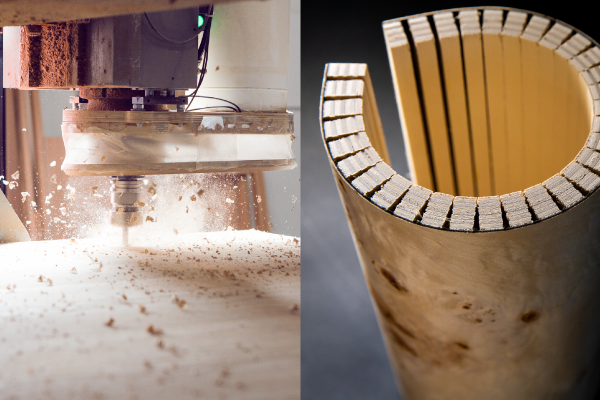
CNC kerfing uses computer-controlled cutting equipment to create a series of grooves that allow rigid wood panels to bend. Kerfkore flexible panels, on the other hand, are manufactured with engineered cores designed for curved architectural applications.
Both approaches can produce curved surfaces, but they differ in fabrication time, labor requirements, finishing, and overall project costs.
So, which option makes more sense for your project? Let’s compare CNC kerfing and Kerfkore flexible wood panels to help you choose the right approach.
CNC Kerfing vs. Kerfkore Flexible Panels at a Glance
| Factor | CNC Kerfing | Kerfkore Flexible Panels |
| Fabrication | Requires cutting and programming | Pre-engineered flexible cores |
| Equipment | CNC equipment and tooling | No CNC kerf-cutting process required |
| Labor | Programming, cutting, and finishing | Less in-house core fabrication |
| Consistency | Depends on setup and materials | Manufactured for consistent bending |
| Finish | May require additional preparation | Designed to support smooth finished surfaces |
| Best Fit | Custom cutting and specialized fabrication | Repeatable curved architectural applications |
What Is the Difference Between CNC Kerfing and Flexible Wood Panels?
CNC Machines are a popular tool in the architectural and interior design realm. They are incredibly consistent, which makes them valuable for high-volume production, and are capable of achieving a high degree of precision for intricate designs.

On the other hand, Kerfkore’s flexible pre-engineered panels are specifically built and designed for various types of radius projects; bending tighter, with more consistency and dimensional stability than traditional products.
Keep reading to find out why pre-engineered panels like Kerfkore may be your best option when it comes to cost, time, and quality— even if you have a CNC machine available.
Which Is More Cost-Effective: CNC Kerfing or Pre-Engineered Panels?
If you don’t already own a CNC machine, purchasing one may pose a large barrier to entry. High-grade CNC machines are expensive. There are cheaper CNC machines available, but those are typically used for hobbyists tinkering in their garage, or one-off proof of concepts. In order to achieve production-level quality, it’s not uncommon to spend $100,000 on a CNC machine. The highest quality, state-of-the-art CNC machines can cost up to $500,000.
That cost doesn’t include the space required to house a CNC machine, regular maintenance, hiring a CNC operator, and the extra costs of buying an expensive piece of manufacturing equipment, such as software and additional tools.
Speaking of maintenance and additional tools, kerfing is hard on a CNC machine. The multiple passes required to achieve a desired depth means more wear and tear on the CNC machine’s blades.
Another option is outsourcing your work to a CNC machine shop which alleviates the upfront expenses but can still be quite costly. Outsourcing in the United States can cost anywhere from $40 per hour to $100 per hour and varies widely in speed and quality.
At Kerfkore, we keep it simple. Instead of considering the many variables and costs of outsourcing to an expensive shop or purchasing a CNC machine yourself, we offer straightforward, standardized pricing for your flexible panels.
One of the biggest concerns companies have when determining how an architectural panel project will be executed is trying to estimate the costs associated. We’ll give you one, consistent price so you can budget up-front and know whether a project will be profitable or not.
How Do CNC Kerfing and Kerfkore Compare in Finish Quality?
Overall, CNC machines are known for their incredible precision and consistency, but when it comes to the art of kerfing, they can leave a bit to be desired.
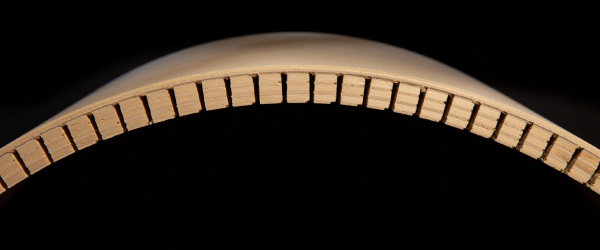
When a CNC machine is creating kerfs it can only achieve a partial cut, which can lead to telegraphing. Telegraphing is where the wood pattern or grain can be seen through the finish. Unless specifically asked for, telegraphing can make a product unusable.
With Kerfkore products, you’ll receive smooth faces and high-quality consistent results with no telegraphing thanks to our precise manufacturing process. And Kerfkore panel cores come specifically cut to provide stability.
All of our panels are engineered with carefully selected, high-quality materials that are less affected by changes in moisture compared to traditional products.

Which Method Saves More Fabrication Time and Labor?
With many companies still struggling to hire help, time is an incredibly valuable resource.
CNC machines save time when compared to the processes and early machine tools they helped replace, but as illustrated above, CNC machine users will have to invest plenty of time into researching the purchase and implementation of a CNC machine.
Included in the implementation of a CNC machine is time spent performing specialized programming, calibration, regular maintenance, and tool changes.
When using a CNC machine for creating kerfs, users will have to determine the exact amount of kerfs needed and the precise spacing between them to achieve a desired bending radius, a tedious and timely process.
With Kerfkore panels, you can simply tell our team what type of radius is necessary, and we’ll provide the perfect Kerfkore product for your project. Beyond saving time creating the panels, Kerfkore also ships products ready for installation, eliminating time spent on tasks like sanding or applying Bondo. Avoiding extra time spent on fabricating and installing can be a huge boon to teams already spread thin by the current labor shortage, and frees up CNC machines for other tasks— making your output more efficient.
When Should You Use CNC Kerfing Instead of Pre-Engineered Flexible Panels?
CNC kerfing can be a practical option for fabricators who already own CNC equipment and need to produce highly customized components.
It may be worth considering when:
- Your project requires specialized cuts or unusual geometries.
- Your team has the equipment and experience to program kerf patterns.
- You’re producing a small number of custom components.
- You want direct control over the fabrication process.
However, creating curved panels in-house also means accounting for programming, cutting time, material waste, and finishing requirements.
For projects involving multiple curved surfaces, repeatable components, or demanding production schedules, pre-engineered flexible panels can help simplify fabrication.
Simplify Curved Panel Fabrication With Kerfkore
Overall, the CNC machine is an incredible manufacturing tool, but it requires an incredible investment of time, money, and resources to utilize to its full potential. Why spend valuable production time creating flexible panels from scratch? Kerfkore’s pre-engineered flexible panels help fabricators create consistent curves while reducing the need for in-house kerf cutting. Speak with a Kerfkore sales rep today or request your free sample kit today.